Discussion Board
Pawtograder’s discussion board, if enabled by your instructor, allows students and staff to discuss course content and ask questions. It is not intended to be a replacement for office hours, although you can format a post as a question that needs an answer (as opposed to a “note” that does not need an answer).
Posts are formatted as Markdown and support code blocks, drag-and-drop attachments, and image uploads. You can drag image files directly into the editor to upload and embed them in your post.
Discussion Board Layout
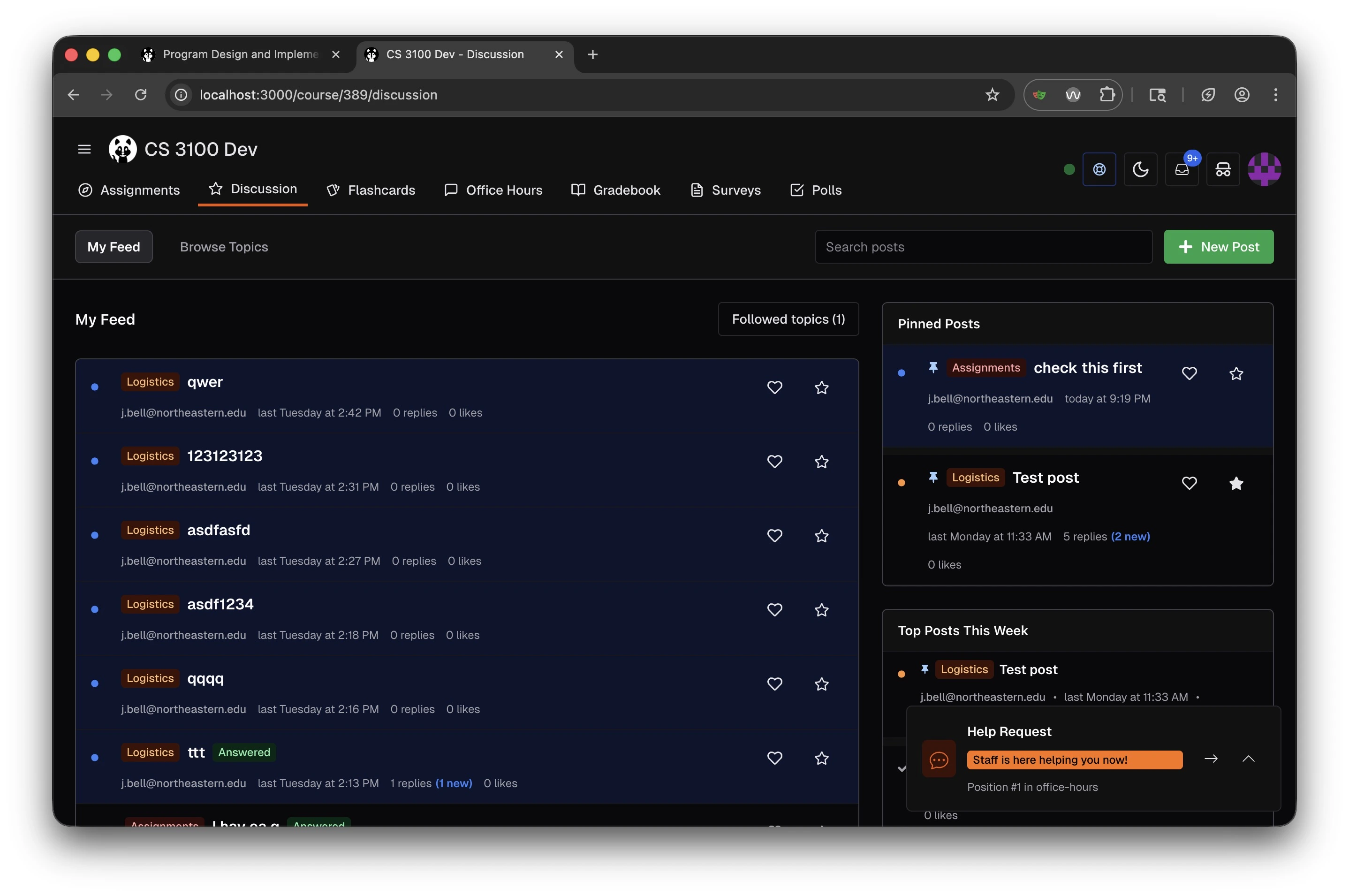
The discussion board features a feed-based layout with helpful sidebar widgets:
Feed Navigation
The header has two views:
- My Feed: the topics you follow plus the individual posts you follow. Until you follow something, it reads “Your feed is empty. Follow a topic (Browse Topics) or follow a post to see it here.”
- Browse Topics: every topic in the course, each with a post count and an unread count. Click the star on a topic to follow or unfollow it.
The header also holds a Search posts box that lists matching posts as you type.
Pinned Posts
The sidebar displays Pinned Posts: important threads highlighted by your instructors. These typically include:
- Frequently asked questions
- Important announcements
- Helpful resources and guides
Pinned posts stay visible in the sidebar for quick access, regardless of how many new posts are created.
Top Posts This Week
The sidebar also shows Top Posts This Week, highlighting the most engaging discussions based on community activity.
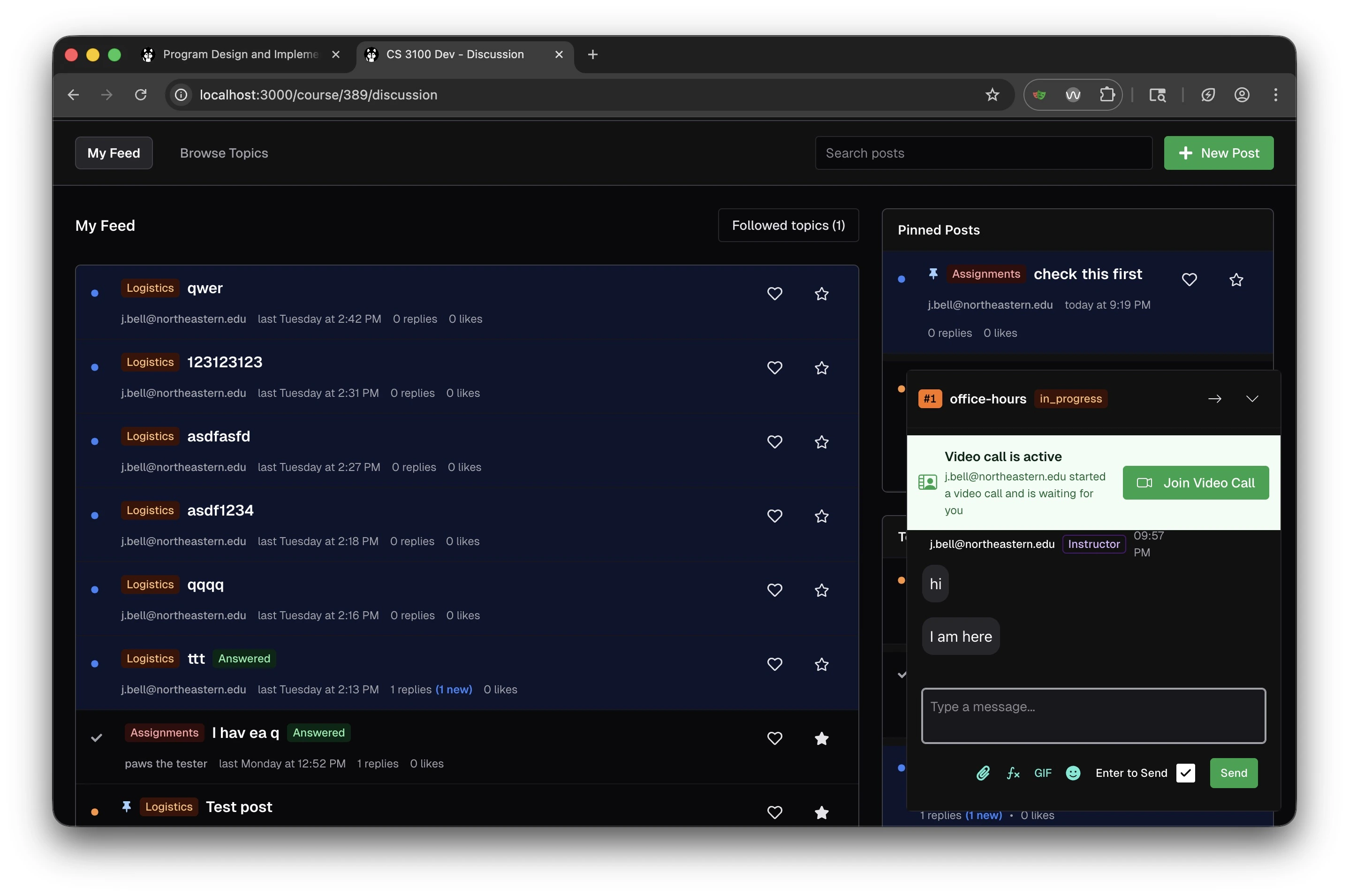
When you have an active help request in office hours, it follows you around the site. A widget appears in the sidebar showing:
- Your current position in the queue
- Status updates (e.g., “Staff is here helping you now!”)
- Video call notifications when a TA starts a video chat
- A Join Video Call button for instant access
This integration ensures you never miss updates on your help request while browsing discussions or working on other parts of the course.
Watching Posts and Notifications
By default, you don’t receive notifications for new posts, but you can watch a post to be notified when it’s updated or receives a reply. Replying to a post automatically watches it.
See Notifications for browser alerts, sound, favicon badges, and other preferences.
If you’re stuck on an error in your submission, Pawtograder may surface related discussion posts directly on the submission page. See Error Pins.
If you need live help instead of posting, see Office Hours.
Post Visibility and Identity
Posts can be shared with the entire class, or with course staff only. Each user in a class has a pseudonym, and can choose to use their real name or their pseudonym. Staff can always see the real name of a user.
Students can edit their own posts, and staff can edit any post.
Creating a New Post
Click the New Post button in the top right to create a new discussion thread. The form asks for, in this order:
- Topic: the category your post belongs to, listed under General Topics and Assignment Topics
- Post Type: Question if you need an answer, Note if you don’t
- Post Visibility: Entire Class, or Staff only if you need to share private assignment details
- Post Anonymity: Post with your name, or Use your pseudonym (course staff always see your real name)
- Subject: a one-line title for the thread. This field is required
- The body of the post, written in Markdown. Drag image files into the editor or paste them from your clipboard, and they are uploaded and embedded for you
The system prevents accidental double-posting by disabling the submit button (and all inputs) after you click it. Wait for the page to navigate to your new thread before creating another post. If you need to make changes after submitting, you can edit your post using the edit button.
Use drag-and-drop image uploads to share screenshots, diagrams, or error messages when asking for help. This works for both new posts and replies to existing threads.
Engaging with Posts
Each post displays helpful metadata:
- Topic tag: Color-coded category (e.g., “Logistics”, “Assignments”)
- Author: Who created the post
- Timestamp: When it was posted
- Replies: Number of responses, with “(X new)” indicators for unread replies
- Likes: Community engagement—click the heart to show appreciation
- Answered badge: Indicates questions that have been resolved
Replies are threaded, allowing for organized conversations. Use the Markdown editor to format your responses with code blocks, links, images, and more. HTML tags in Markdown content are automatically escaped for security, so they display as text rather than being rendered.
Karma System
Your karma is the number of likes your posts and replies have received. Each like adds a point, removing a like takes it back away, and karma never falls below zero. Nothing else changes it.
A karma badge sits next to your name on the thread you opened and on every reply you write. Its icon tracks your total: a green sprout at 0, a heart from 1 to 10, a blue star from 11 to 49, and a gold trophy at 50 and above. Hover the badge to see the count, which reads “N likes received”.
Focus on providing thoughtful, helpful responses rather than maximizing karma. Quality contributions naturally earn recognition from your peers.