

Queue Configuration
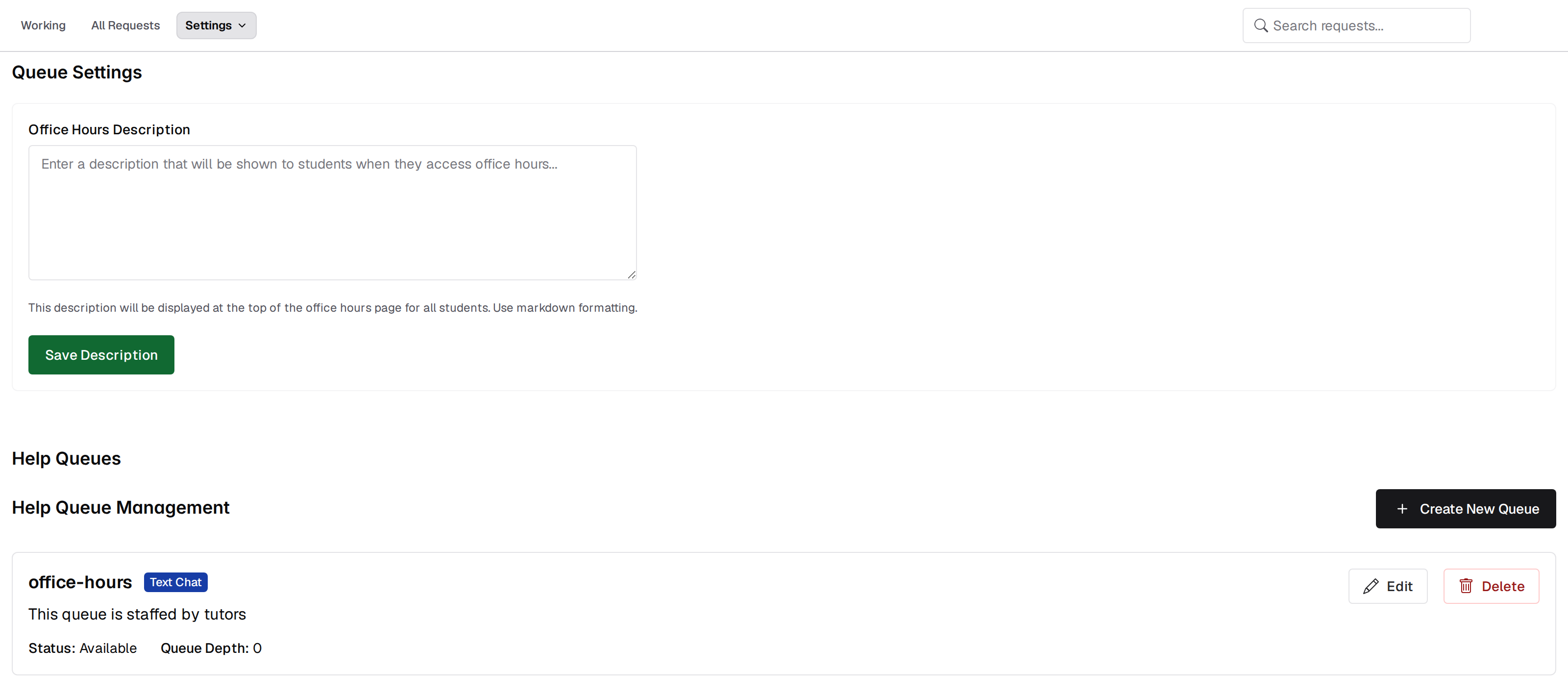
Queue setup lives under Settings → Queue Management and Settings → Templates. Both are open to instructors and graders.Queue Management
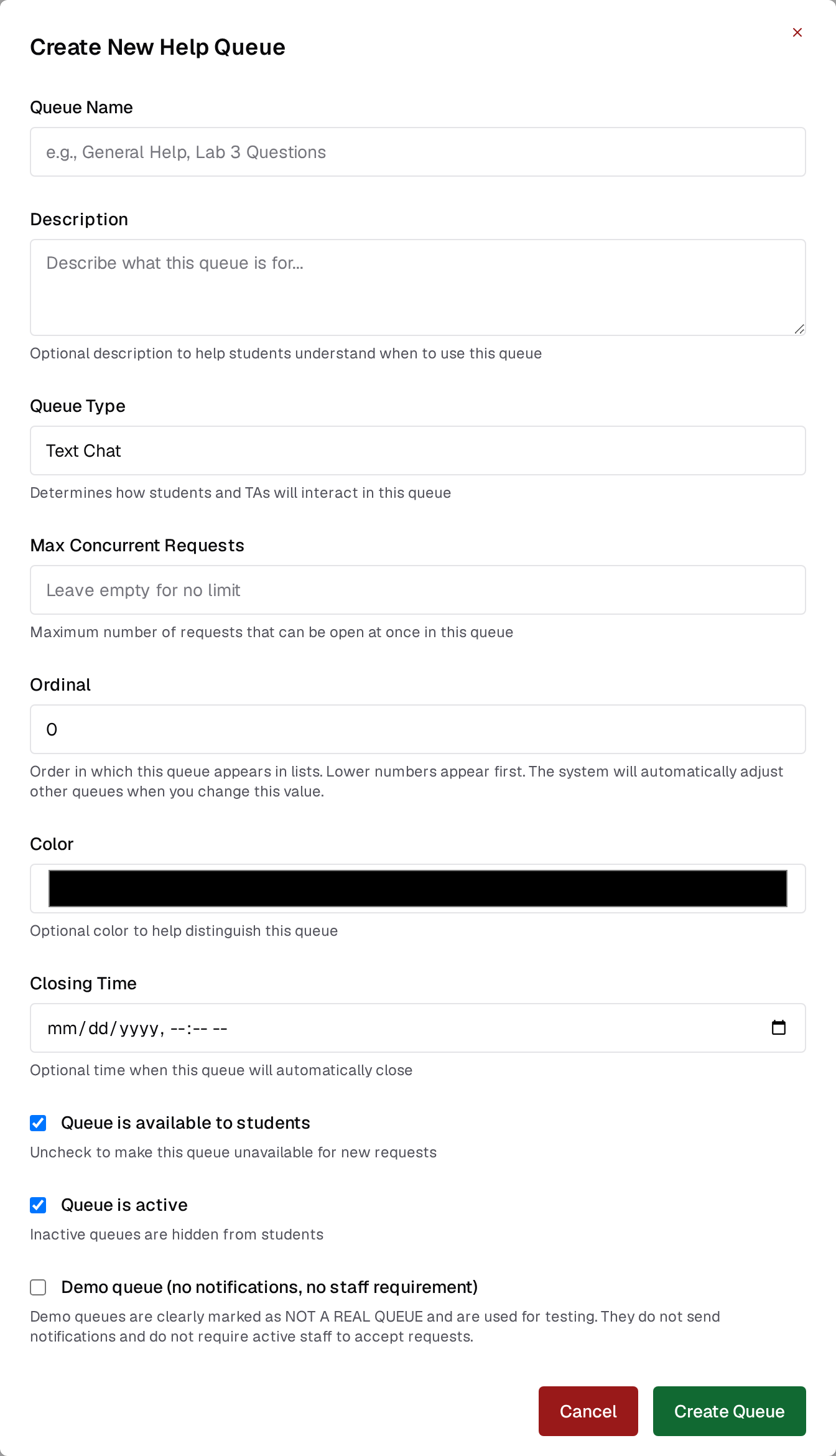
Ordinals are kept unique for you. Moving a queue to a position that is taken shifts the queue already there, and everything after it, one place later, so you never end up with two queues claiming the same slot.
Available, active, and who sees what
The two flags are not interchangeable, and no single surface checks both.
An inactive queue that is still available therefore stays listed for students and still accepts requests, while disappearing from your dashboard. Use available to close a queue for business, and active to tidy your own dashboard.
Office hours description
The Office Hours Description field at the top of Queue Management writes one markdown block for the whole course. It renders in the student help drawer and above the new-request form. Its helper text claims it appears at the top of the office hours page, which it does not.Discord and the calendar
Each queue card carries one button that opens the queue’s Discord channel. Calendar events are matched to a queue by explicit link first, then by a case-insensitive match between the event’s queue name and the queue’s name; the shift times that match produces are the ones on the staff queue cards, described in Running Office Hours. The calendar URL itself is set under Course Settings → Discord, in the Calendar Integration section. See Course Settings.Templates
A template is a prompt structure that pre-fills the description box on a new request, so students arrive having already answered “what have you tried” and “what is the error”. Under Settings → Templates, each template has a name, a category, an optional description, the content itself, and an active flag. The category groups your own list on this page; the student picker lists names only. Templates are grouped by category under Active Templates and Inactive Templates, and each card offers Edit, Deactivate or Activate, and Delete.See also
- Running Office Hours for putting staff on duty once the queues exist.
- Submitting a Request for the form your queue settings and templates produce.